
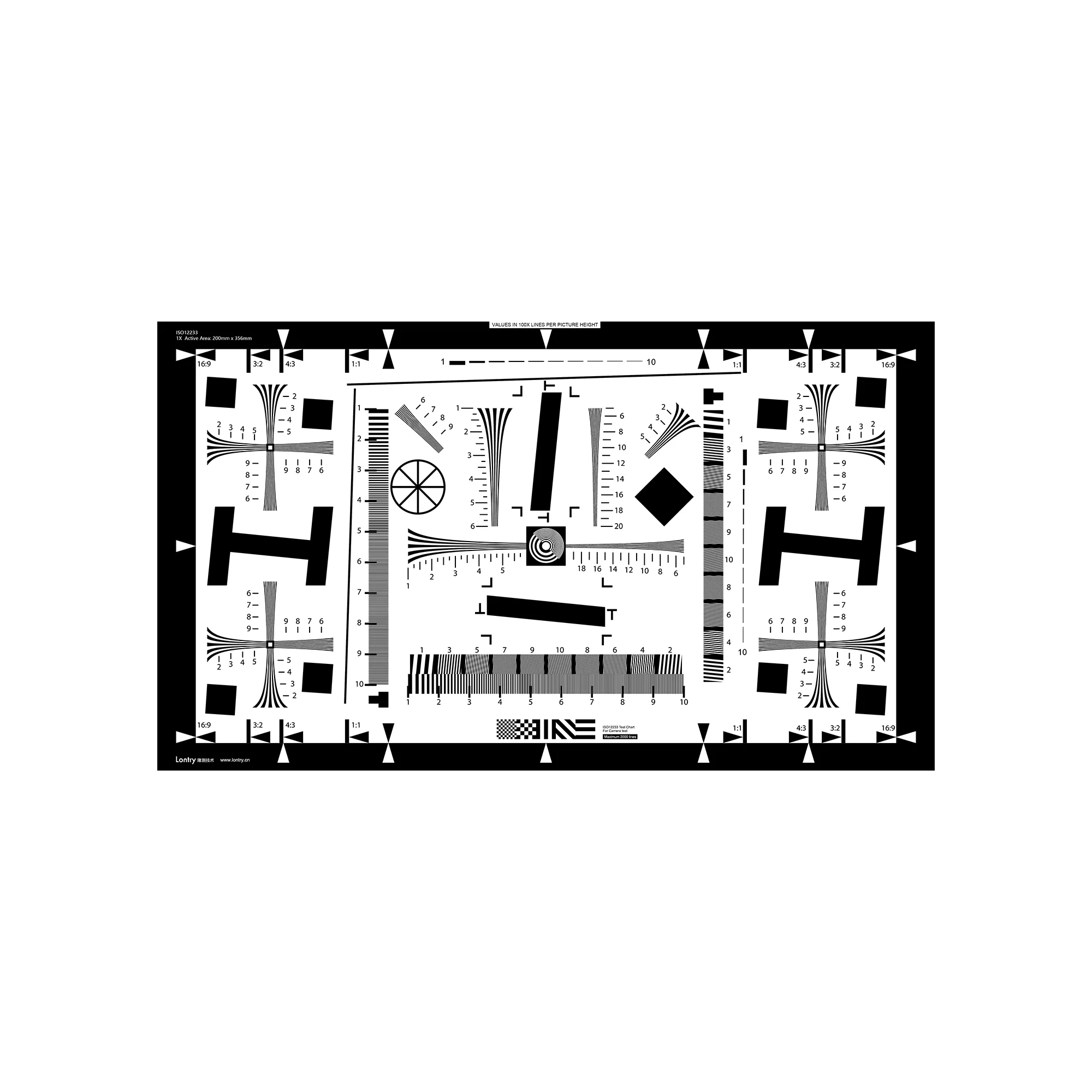
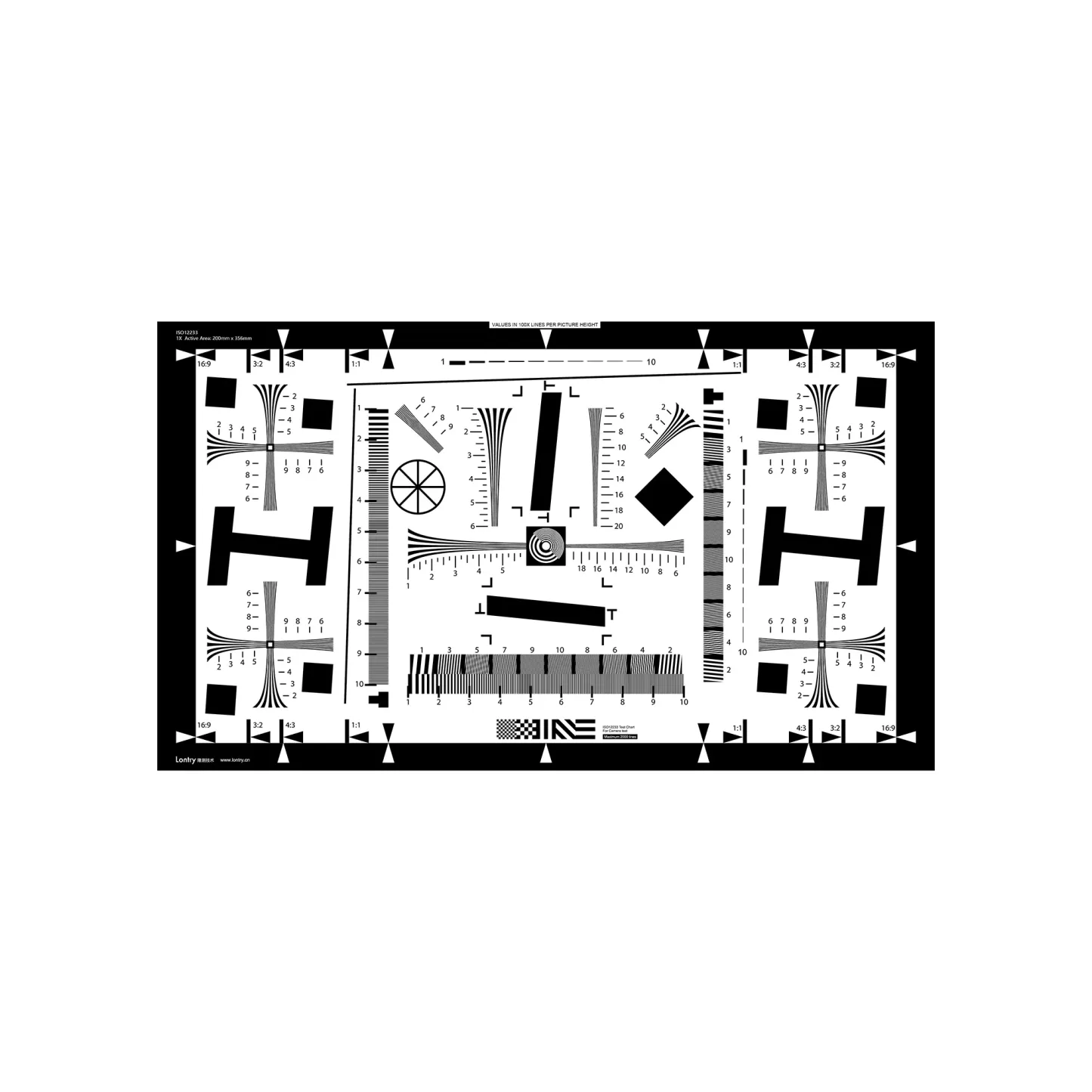
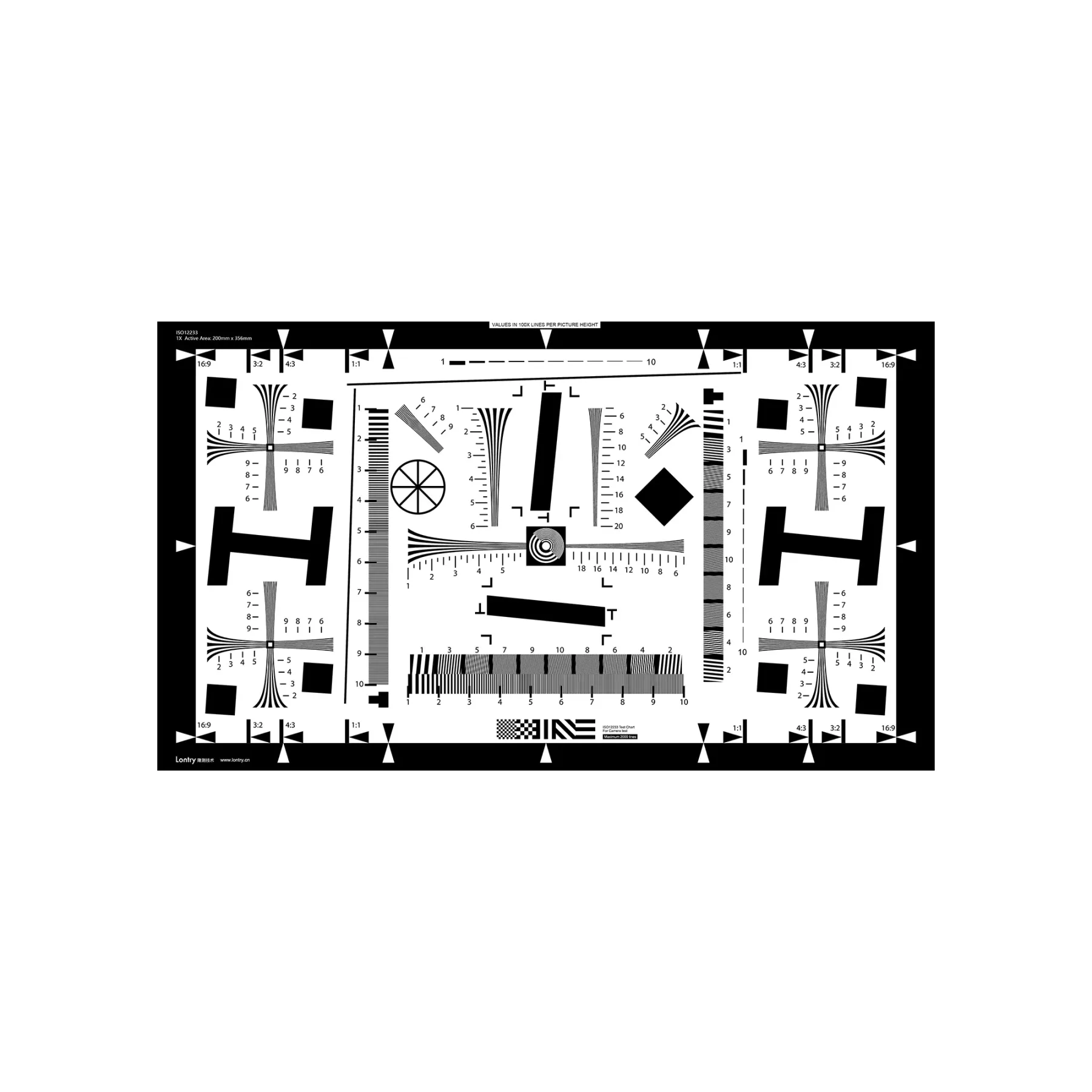
Technical details of Optical Test Chart
| Product | Film | |
| Pattern | Production Process | Reprint |
| Minimum Line/space | 15μm / 30μm | |
| Feature Accuracy | ±10μm | |
| Coating | Photosensitive ink | |
| Optical Density OD | 2(Transmittance=1%) | |
| Reflectivity | 6% | |
| Color Selection | Black | |
| Film Base | Application | Reflective and Transmissive illumination applications |
| Expansion Coeff | 18μm/℃ of 1m | |
| The film contract with heat and expand with cold. | ||
| When the relative humidity is constant, the film with a length of 1m will change by 18μm when the temperature changes by 1℃. | ||
| Transmission (400~700nm) |
>50% | |
| Film Base Thickness | 0.1±0.01mm) | |
| MAX Size | 1.8x1.2m (±0.1mm) (Min Line 15μm) | |
| Waterproof | Waterproof | |
| Overall Shape | Straight Edge Cutting / Round Hole Hollowing by Laser Cutting | |

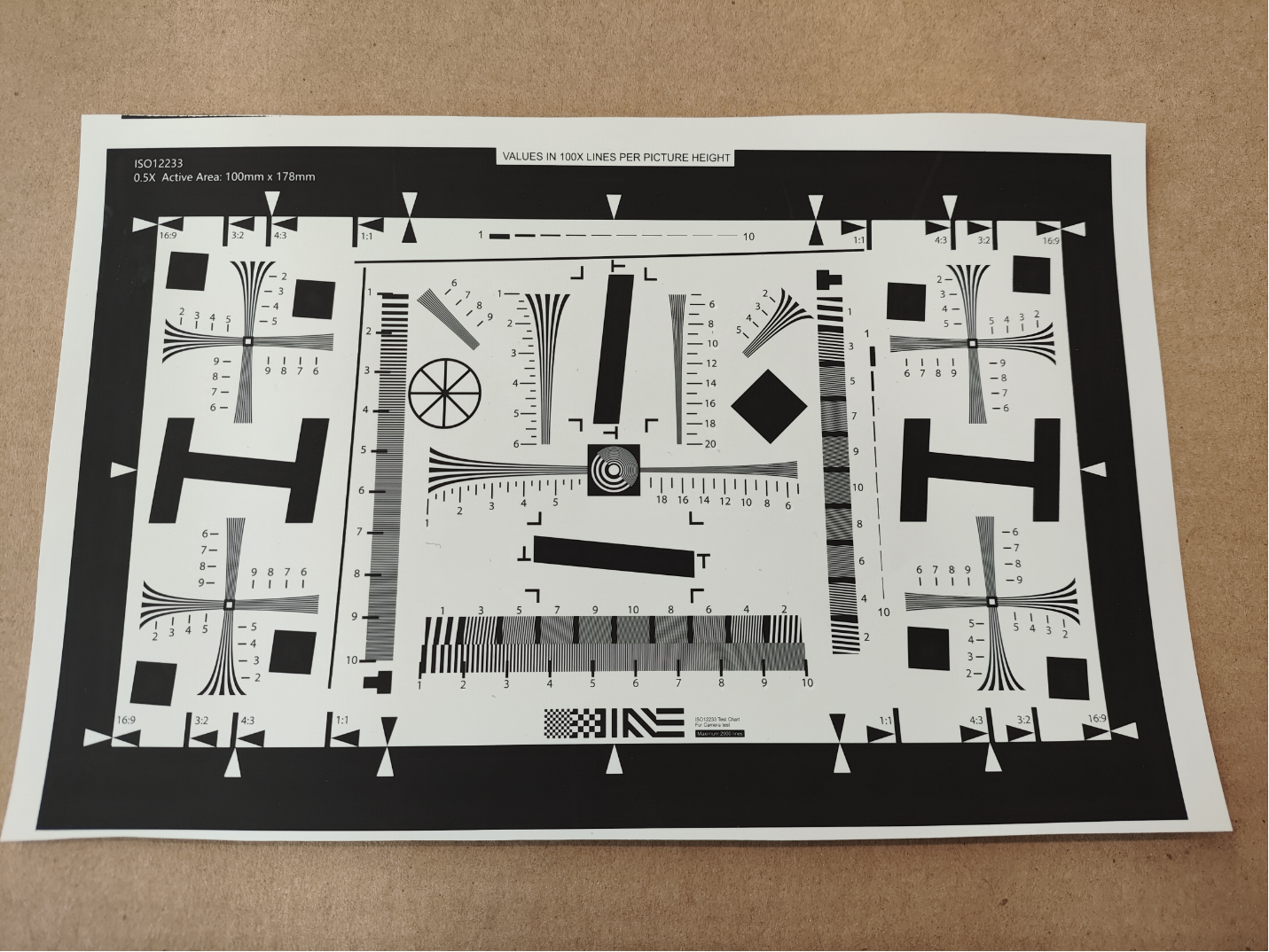

FAQ of Optical Test Chart
1. What makes this Optical Test Chart different from a rigid glass or ceramic target?
This Optical Test Target uses a flexible film base with a thickness of 0.1 ± 0.01 mm. It is lighter and easier to produce in large dimensions than a rigid target, but it must be mounted flat to prevent wrinkles, stretching, or surface curvature from affecting the test.
2. Can this Optical Test Chart be used with both reflective and transmissive illumination?
Yes. The page lists both reflective and transmissive applications. When the Camera Test Chart is backlit, exposure should account for the film base transmission of more than 50% across 400–700 nm. Under front illumination, the stated 6% reflectivity and possible glare should be considered separately.
3. What does OD 2 mean for the black pattern on this Optical Test Chart?
An optical density of 2 corresponds to approximately 1% transmittance through the black pattern. This allows the Optical Calibration Chart to create a defined dark area against the film background, although the final image contrast still depends on illumination, exposure, and the camera’s dynamic range.
4. What feature size and accuracy are specified for this Optical Test Chart?
The page lists a minimum line/space specification of 15 µm/30 µm and feature accuracy of ±10 µm. These values describe the manufacturing capability of the Image Quality Test Chart and should not be treated as the final measurement accuracy of the complete camera system.
5. Does the waterproof rating mean this Optical Test Chart can be washed with chemicals?
No. The page describes the film as waterproof but does not provide an IP rating, chemical-resistance specification, or abrasion test. Avoid solvents and aggressive cleaning. Remove loose dust with clean air or a soft, lint-free material, and confirm compatibility before using any cleaning liquid.
6. How should this Optical Test Chart be mounted for dimensionally stable measurements?
Mount the film on a flat, rigid support without tension, bubbles, or wrinkles. The page reports a dimensional change of 18 µm per meter for each 1°C temperature change at constant relative humidity. Allow the target to reach the test-room temperature before performing precision measurements.