
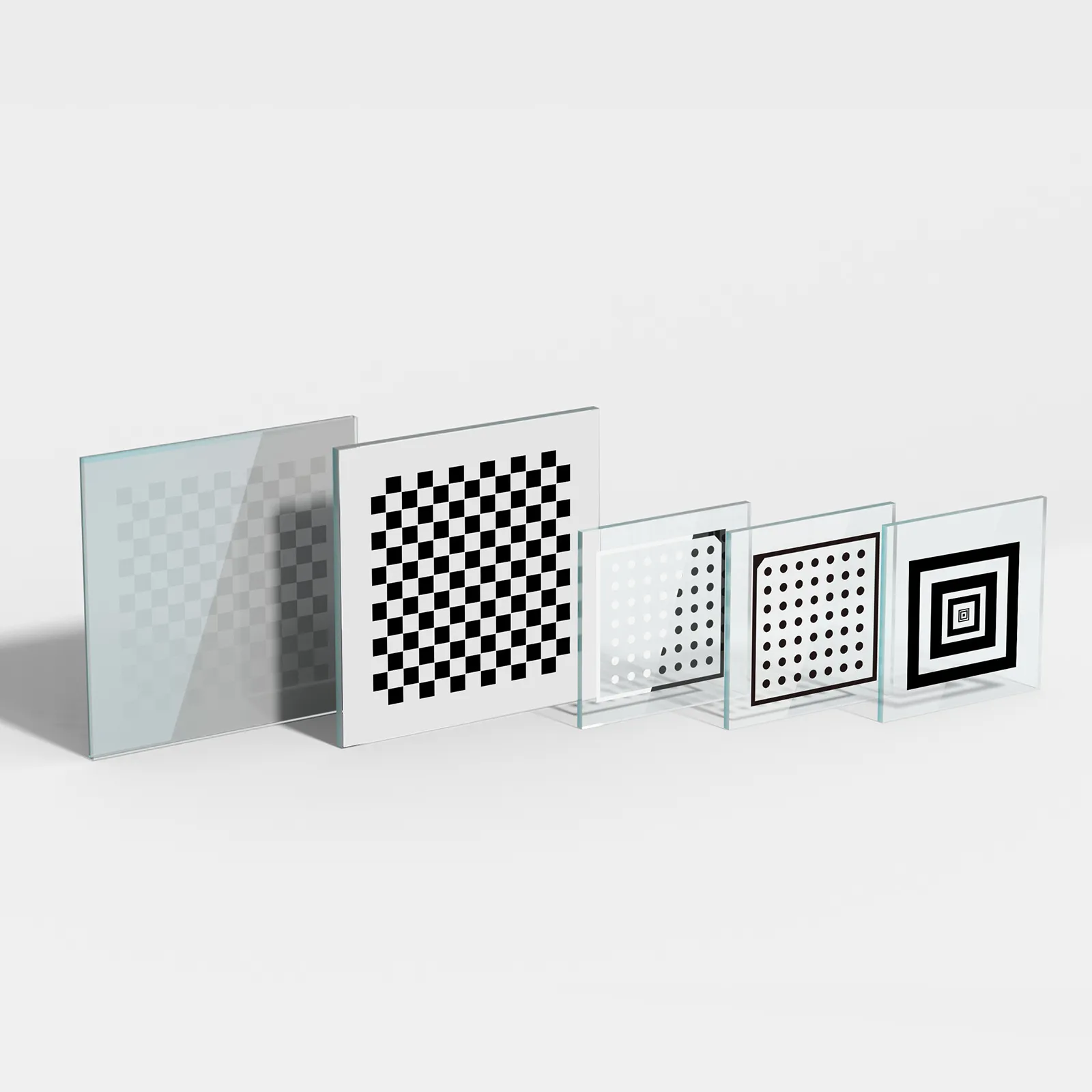
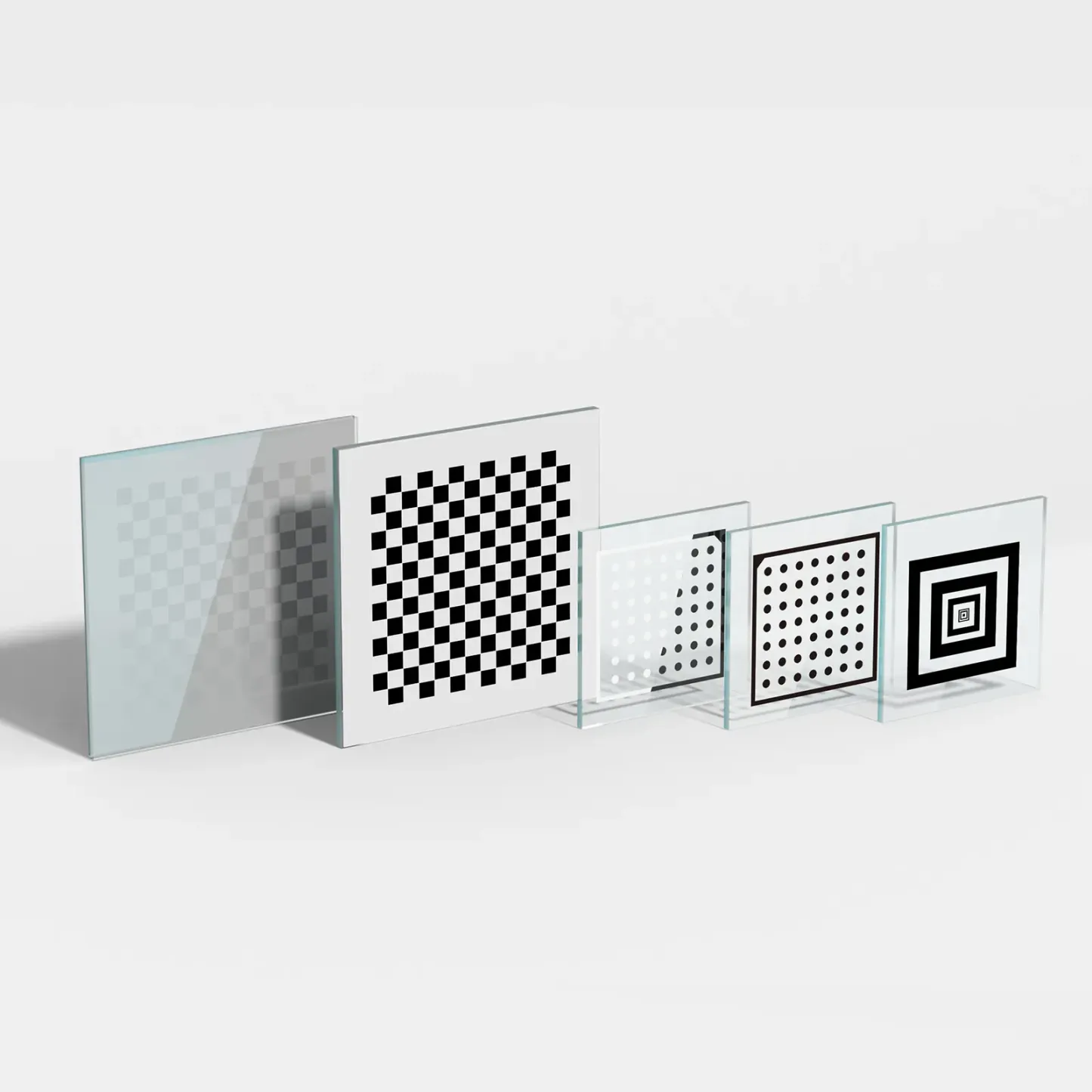
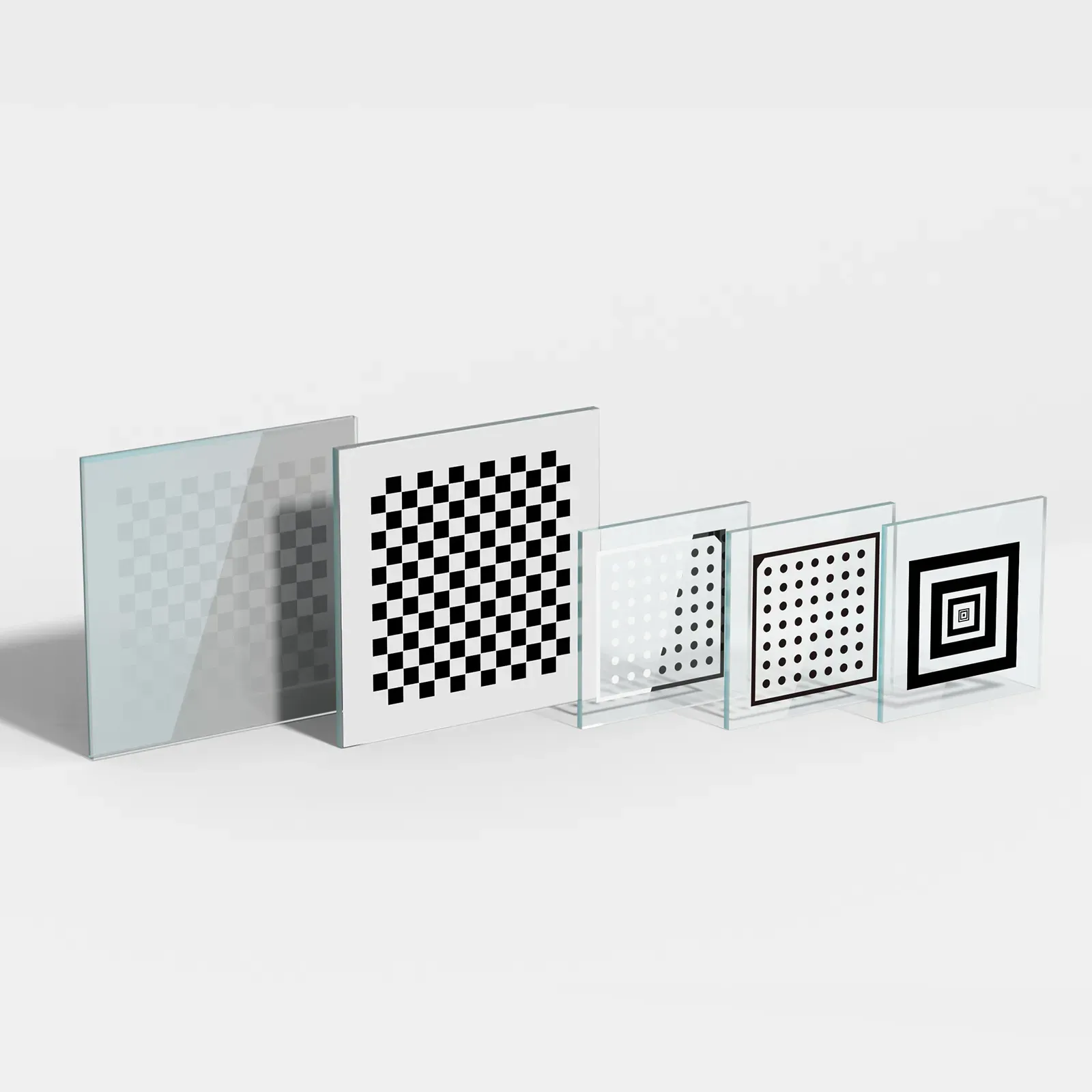
Specification of Glass Photomask
| Product Specification | |||||||||
| Pattern | Substrate Material | ||||||||
| Production Process |
Laser Writing | Substrate Material of Glass |
Soda Lime Glass | ||||||
| Minimum Line/space |
20 μm | Thermal Expansion Coeff (15-200 ℃) |
<100X10⁻⁷ | ||||||
| Feature Accuracy Overall Accuracy |
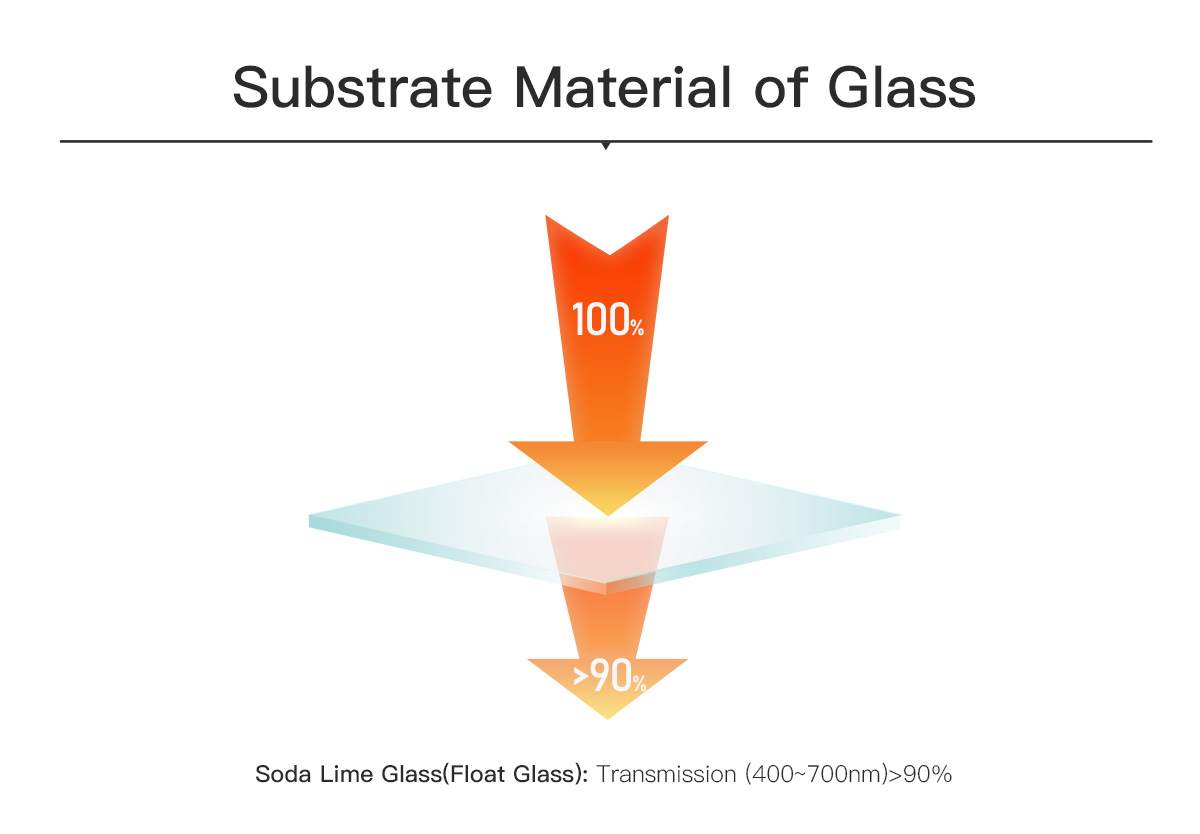
±2μm | Transmission (400~700nm) |
>90% | ||||||
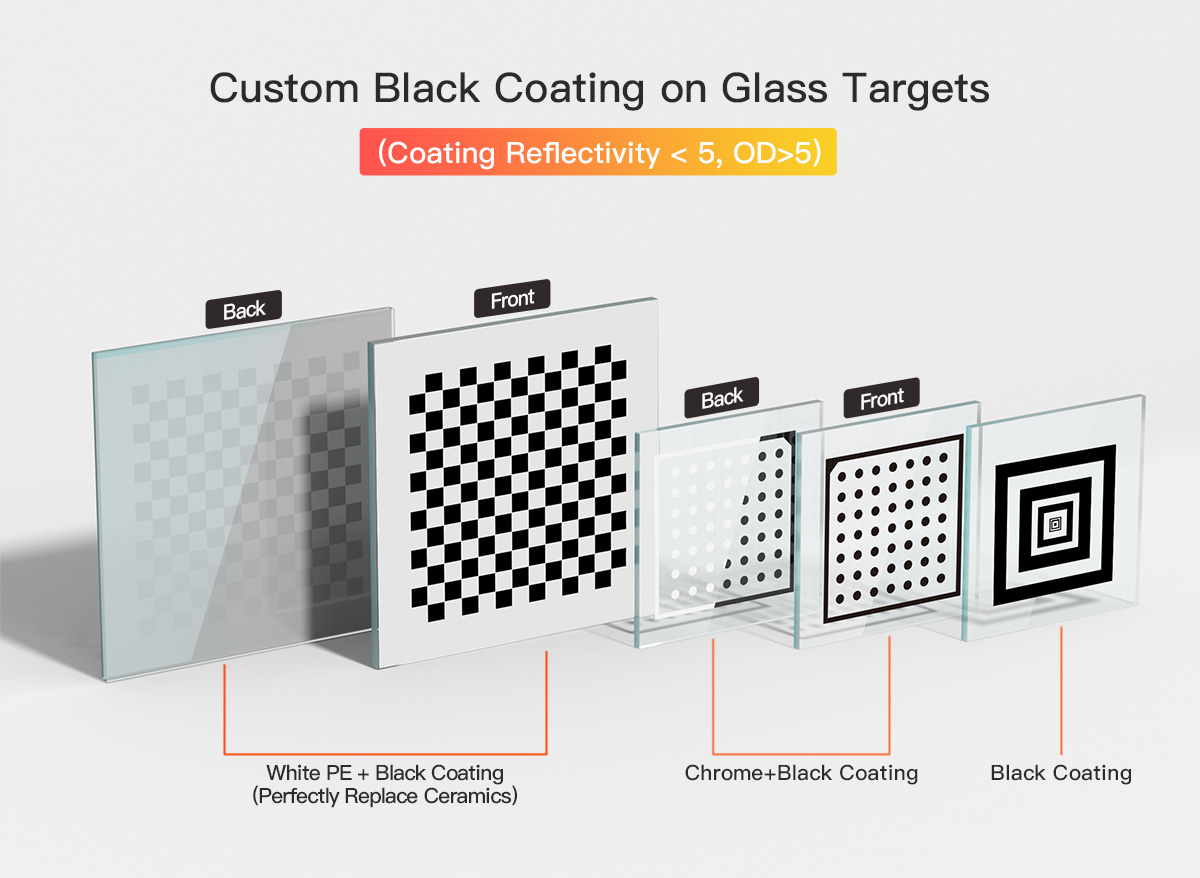
| Coating Type | Black Coating |
Chrome+Black Coating |
White PE + Black Coating (Perfectly Replace Ceramics) |
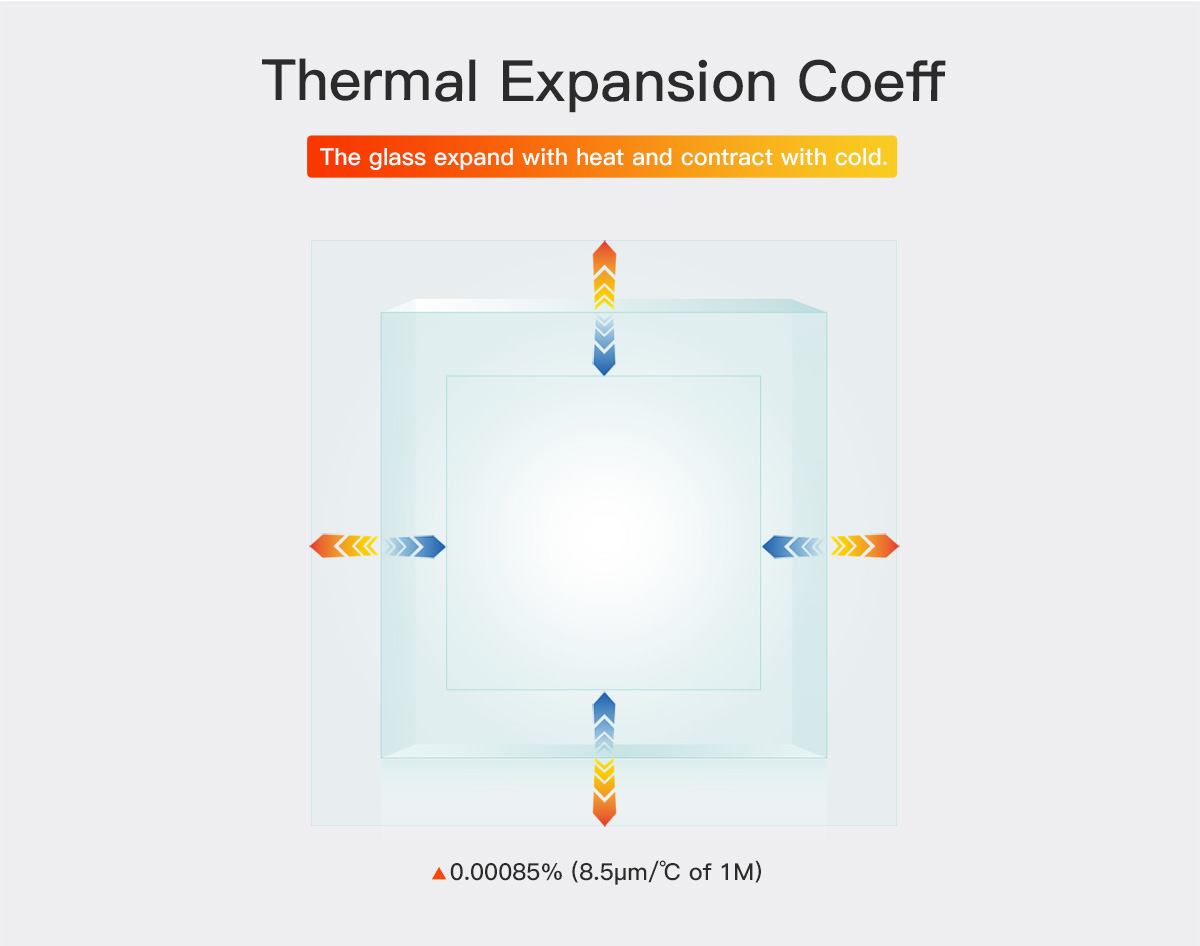
Expansion Ratio | 0.00085% (8.5μm/℃ of 1M) |
||||
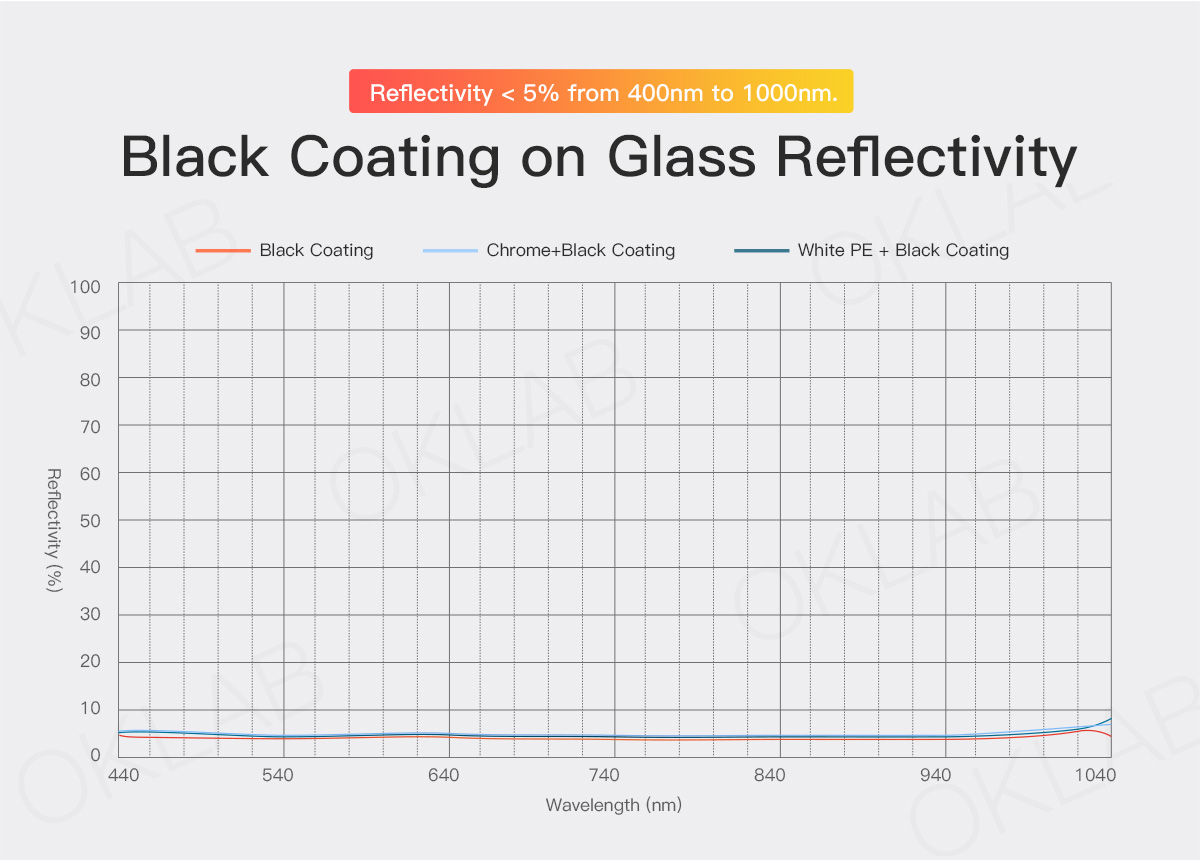
| Reflectivity | < 3.89% @550nm |
< 4.88% @540nm |
<4.68% @550nm |
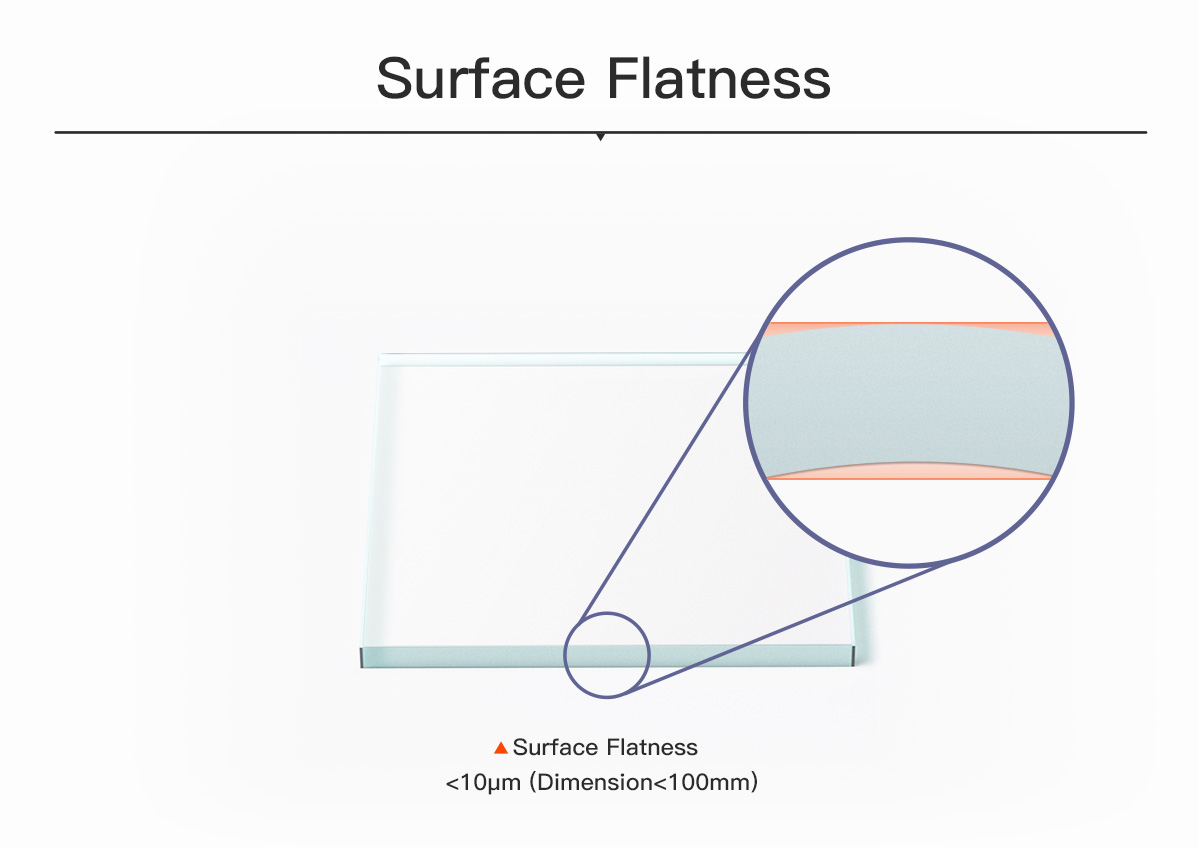
Surface Flatness |
<10μm (Dimension<100mm) | ||||
| < 4.08% @650nm |
< 4.99% @640nm |
< 4.72% @650nm |
|||||||
| < 3.67% @750nm |
< 4.16% @740nm |
< 4.164% @750nm |
|||||||
| Coating Thickness | 0.06mm (±0.01mm) |
0.04mm (±0.01mm) |
0.12mm (±0.01mm) |
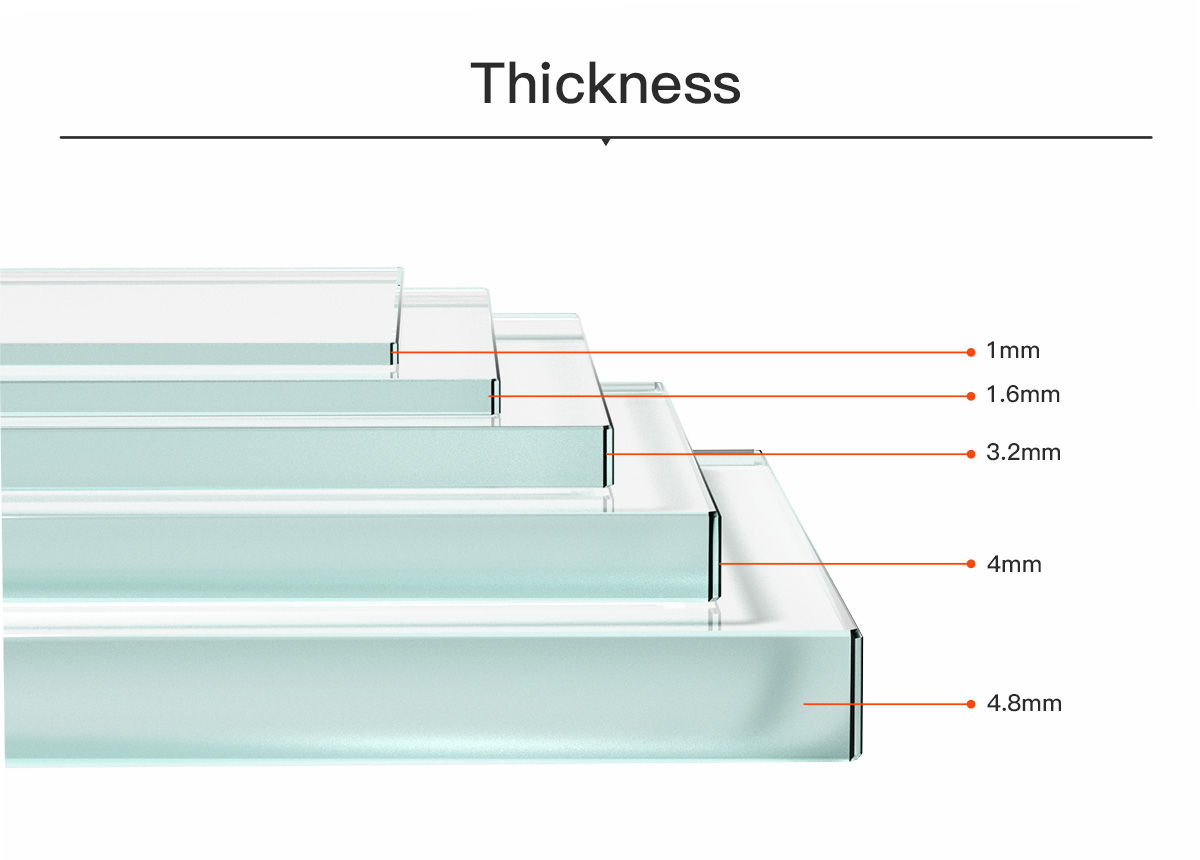
Thickness | 1mm (±0.3mm) |
1.6mm (±0.3mm) |
3.2mm (±0.3mm) |
4mm (±0.3mm) |
4.8mm (±0.3mm) |
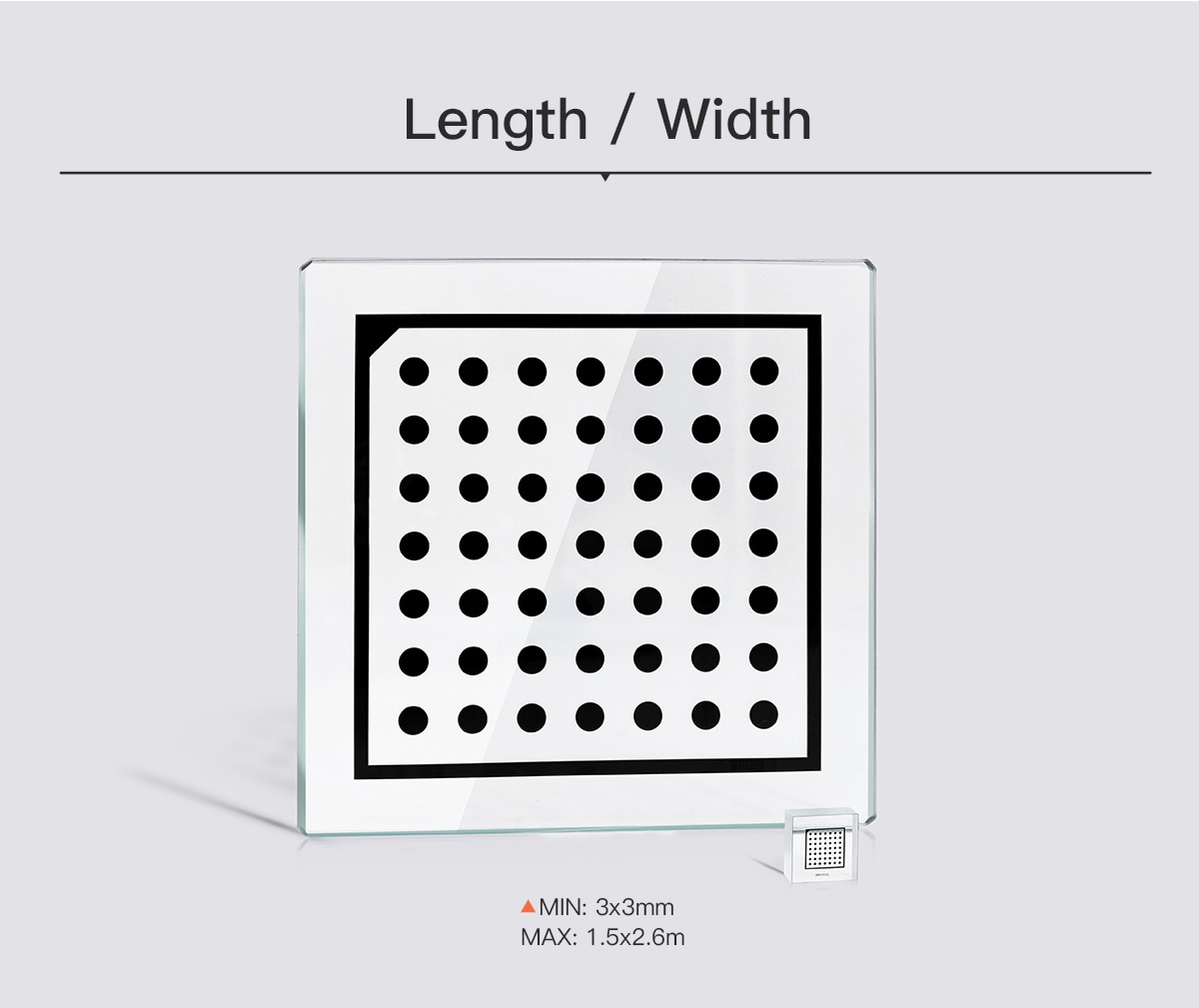
| Optical Density OD | >5 | >4.2 | >3 | MIN / MAX Size | MIN: 3x3mm (±0.1mm) MAX: 1.5x2.6m (±0.1mm) |
||||
| Coating Glossy or Matte |
Matte | Matte | Matte | Rockwell hardness | 3-3.5 HRA | ||||
| Reflection Type | Transmission | Transmission | Diffuse Reflection |
Surface Quality | Scratch/Dig 40-20 |
||||
| Positive / Negative | Positive: Opaque Pattern, Clear Background. Negative: Clear Pattern, Opaque Background. |
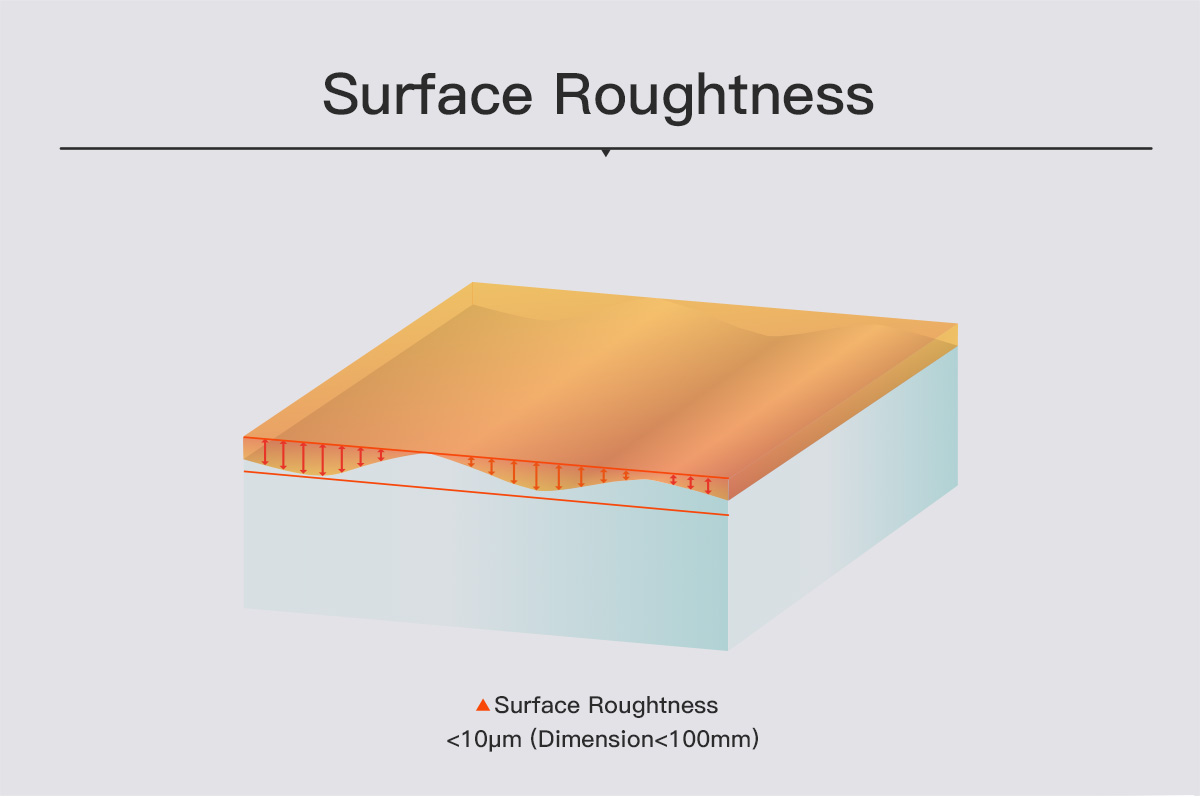
Surface Roughness | <0.2-0.7μm | ||||||
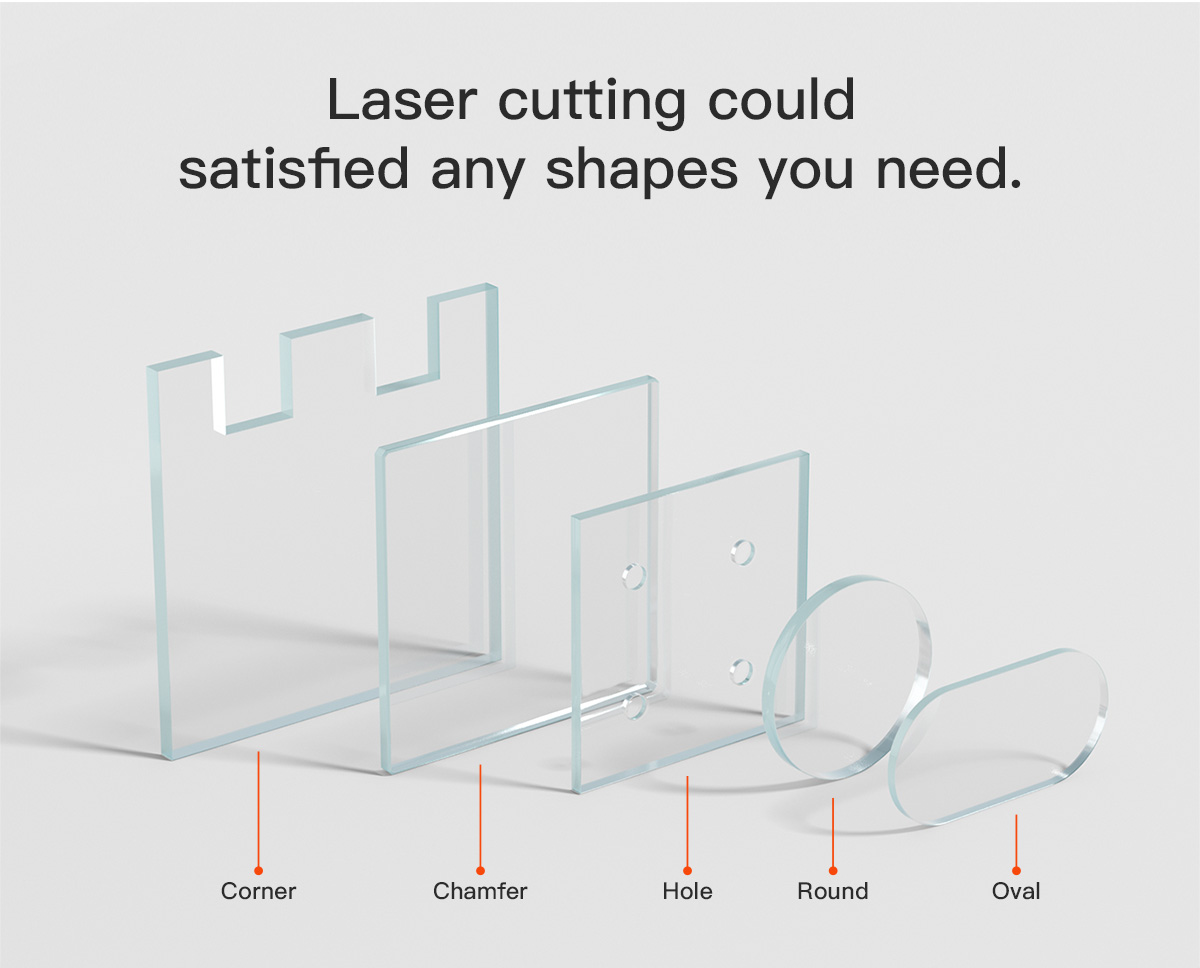
| Protection Layer | Available | Cutting | Any Shape by Laser Cutting (±0.01mm) | ||||||
Custom Glass Photomask
| Custom Service | |||
| Digitalize Drawing | Our engineers would help you digitize the drawing for free. | Third Party Certification | Provide third-party certification reports. |
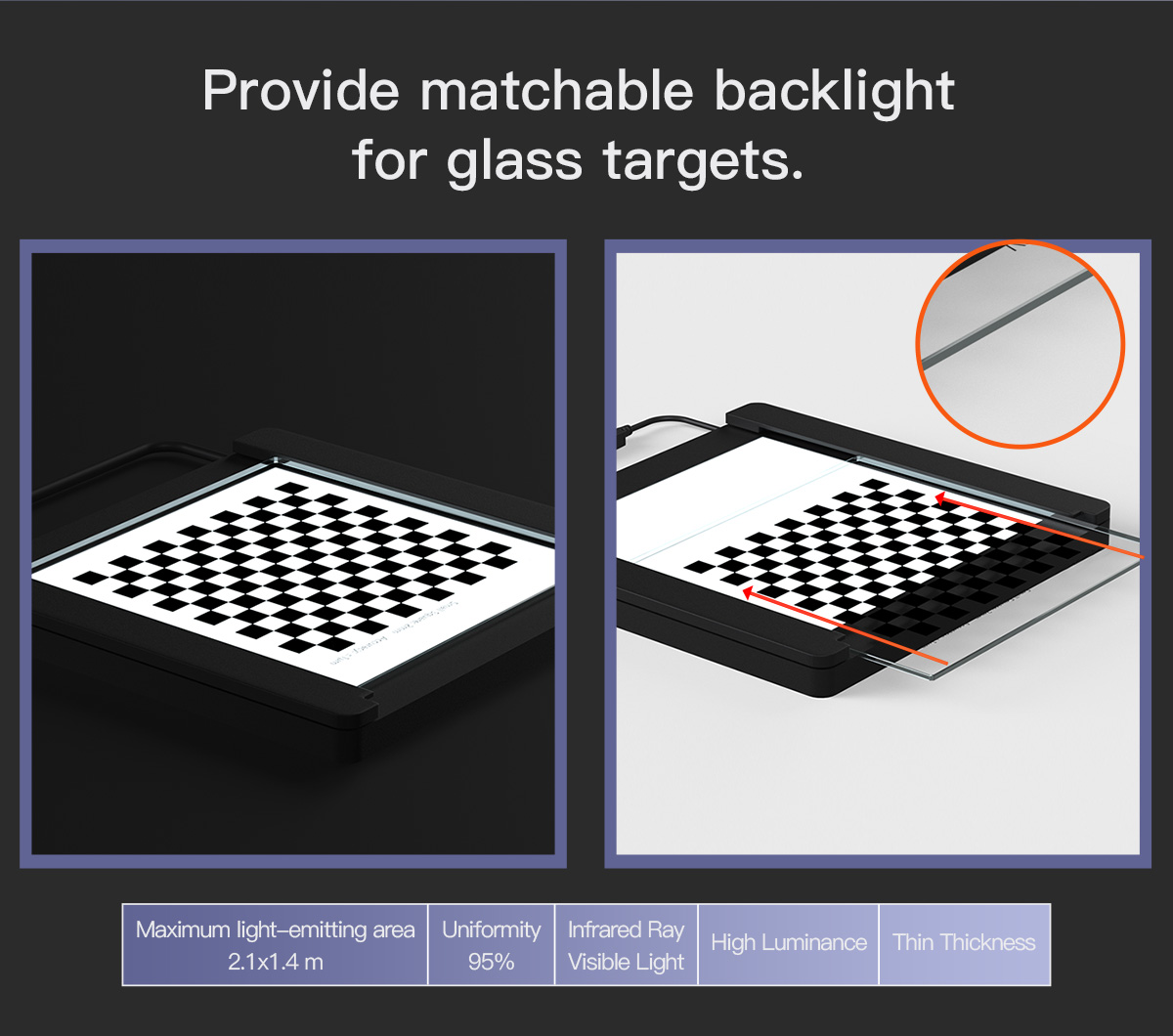
| Matchable Backlight | Provide matchable backlight for glass targets. | Test Report by OKLAB | Available |
| Customization Quantity | Customization MOQ is 1 pcs. | Customization Production Days | 5 Working Days |
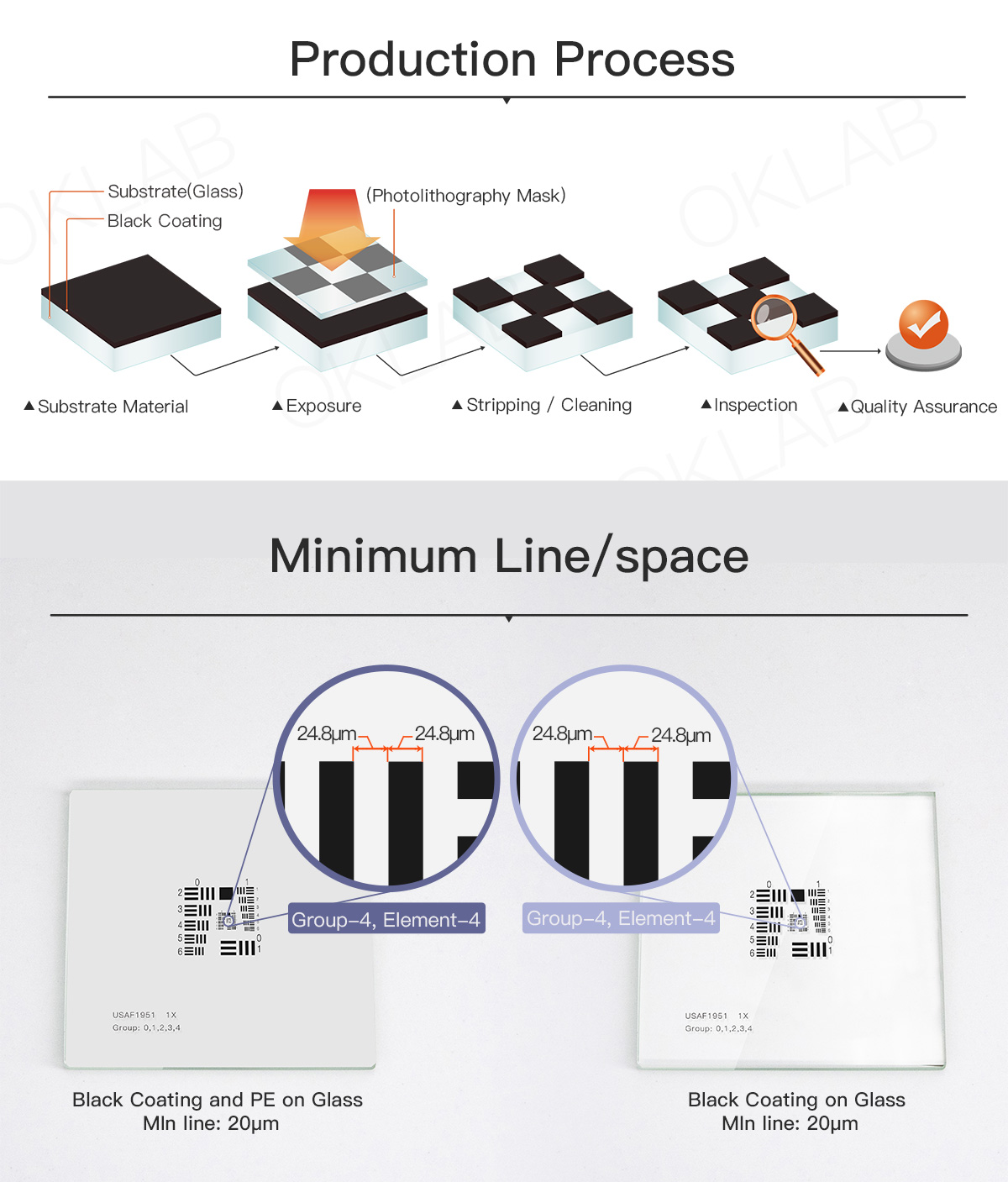
Production Process of Glass Photomask
Coating Type of Glass Photomask |
|||
| Type | 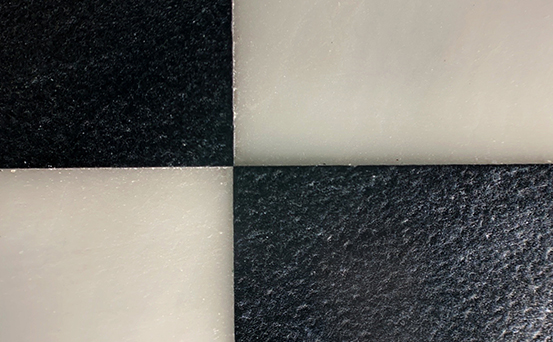 |
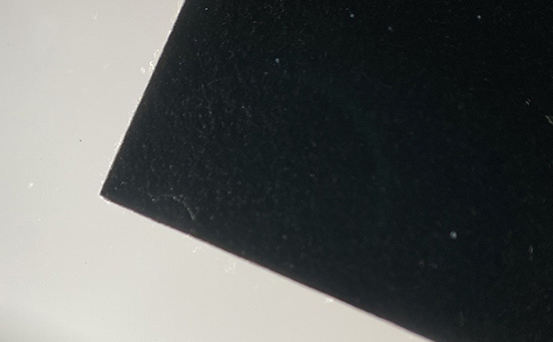 |
 |
| Black Coating | Chrome+Black Coating | White PE + Black Coating (Perfectly Replace Ceramics) |
|
| Reflectivity | < 3.89% @550nm | < 4.88% @540nm | <4.68% @550nm |
| < 4.08% @650nm | < 4.99% @640nm | < 4.72% @650nm | |
| < 3.67% @750nm | < 4.16% @740nm | < 4.164% @750nm | |
| Coating Thickness | 0.06mm (±0.01mm) |
0.04mm (±0.01mm) |
0.12mm (±0.01mm) |
| Optical Density OD @550nm |
>5 | >4.2 | >3 |
| Coating Glossy or Matte |
Matte | Matte | Matte |
| Reflection Type | Transmission | Transmission | Diffuse Reflection |
|
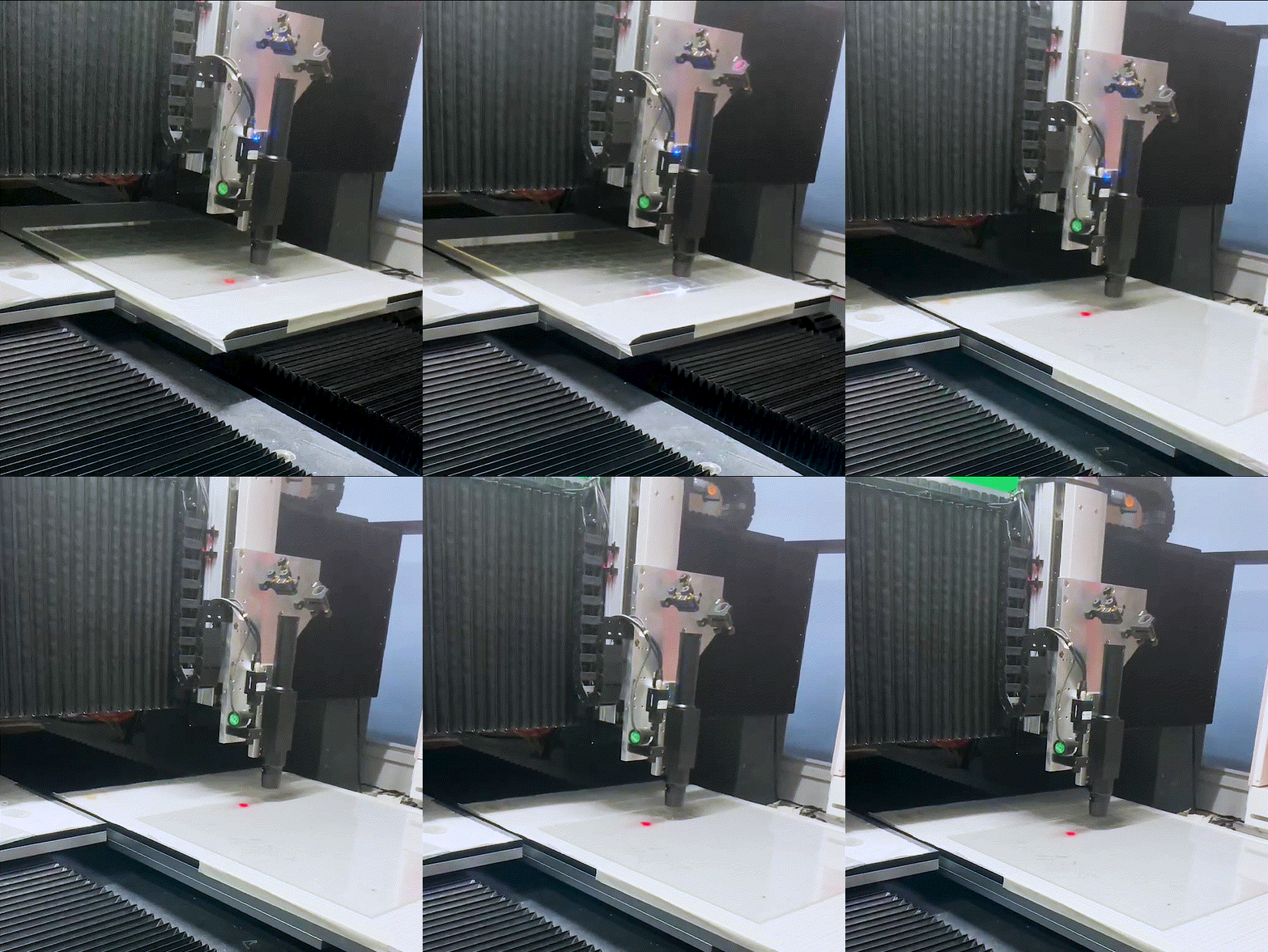
• Cutting is accurate, tolerance ±0.01mm. |
 |


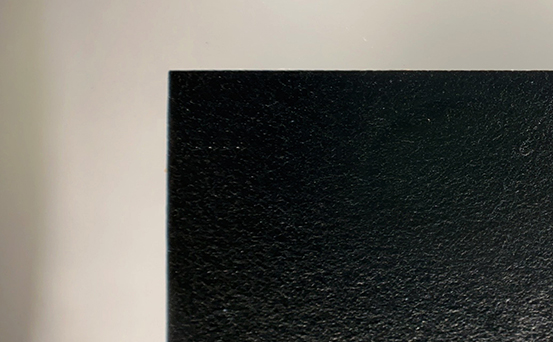
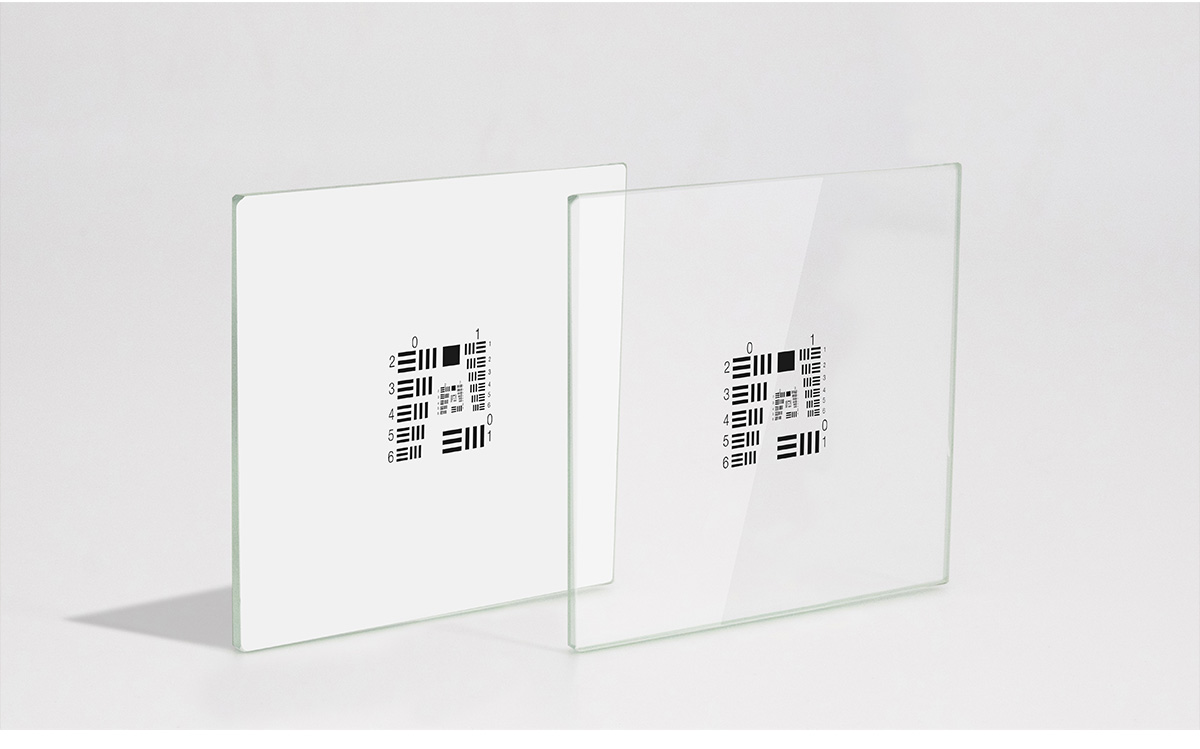
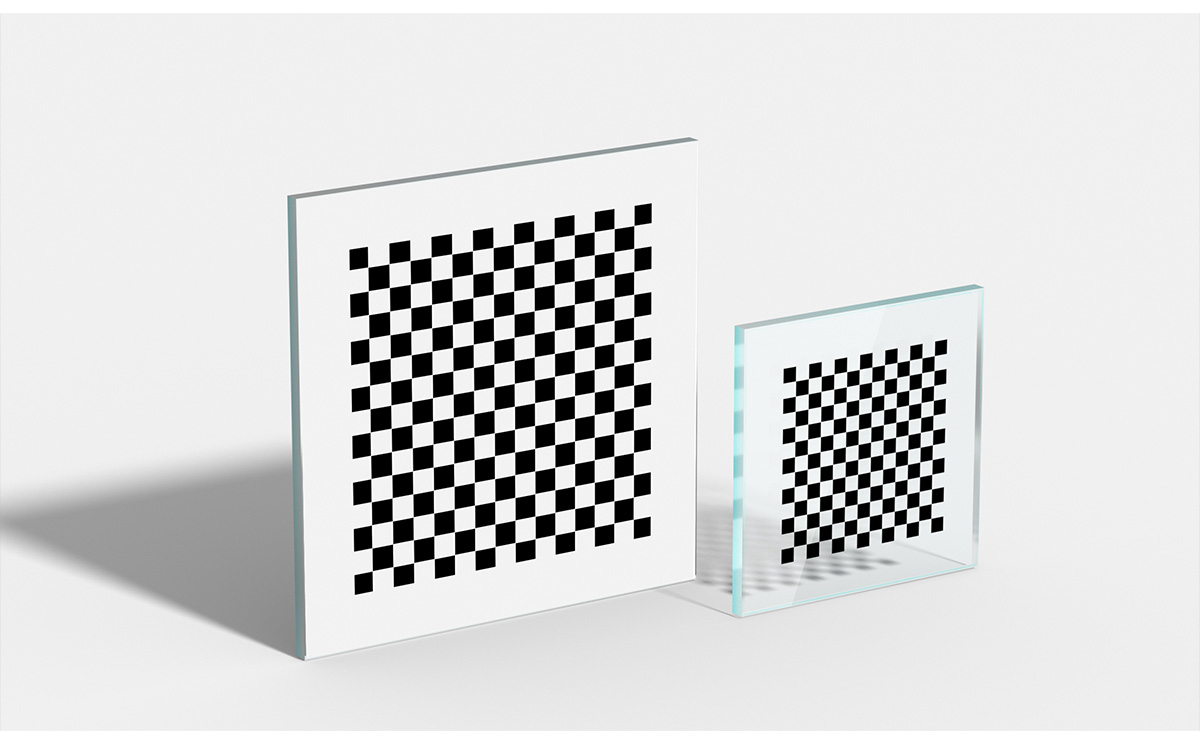
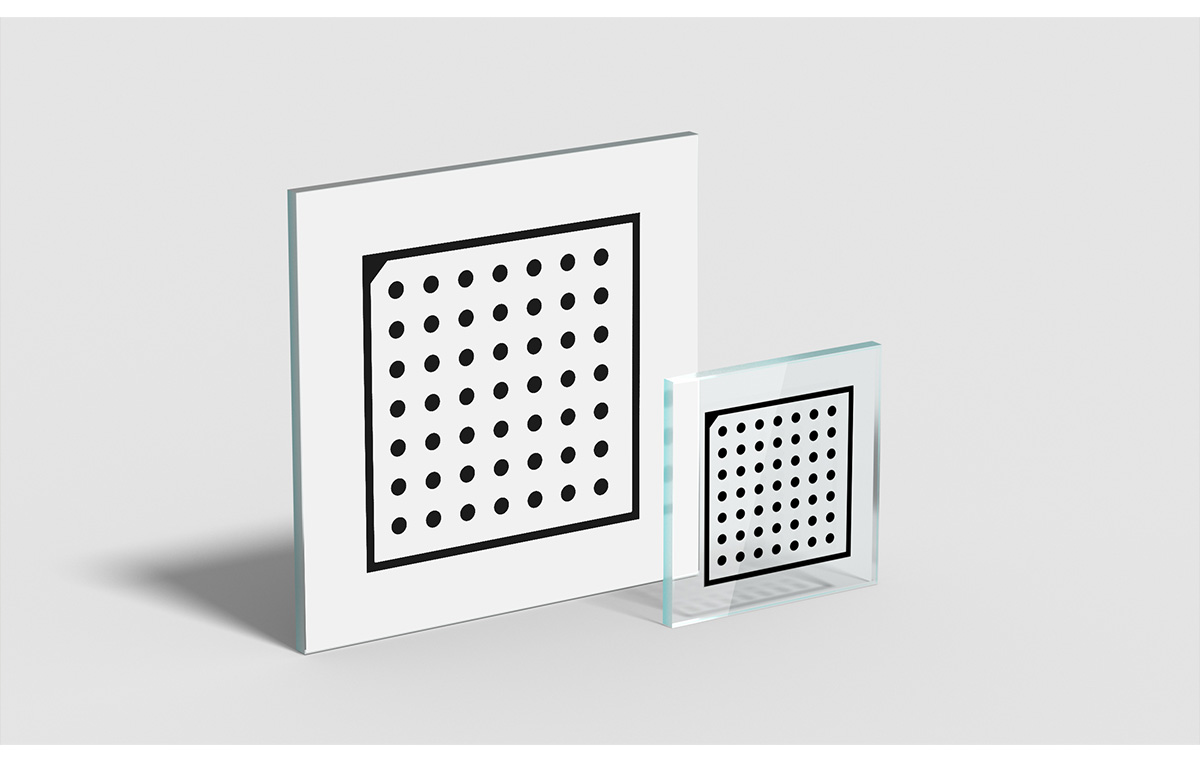
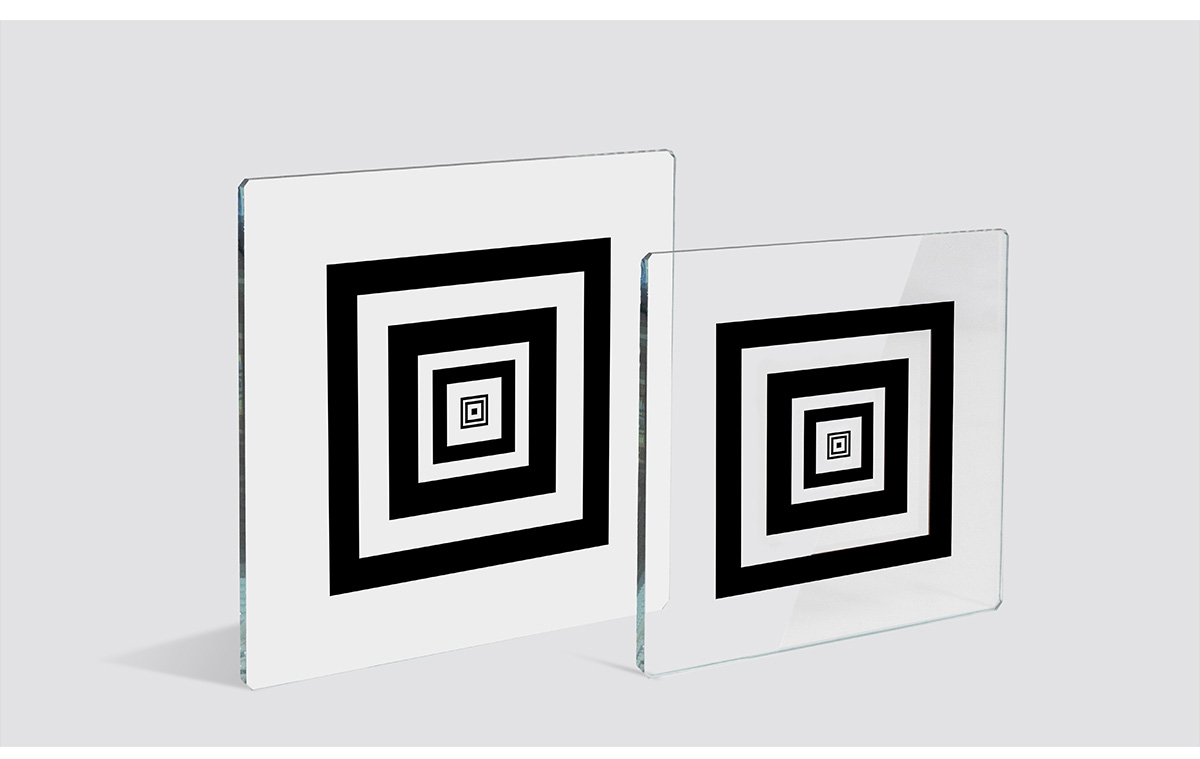
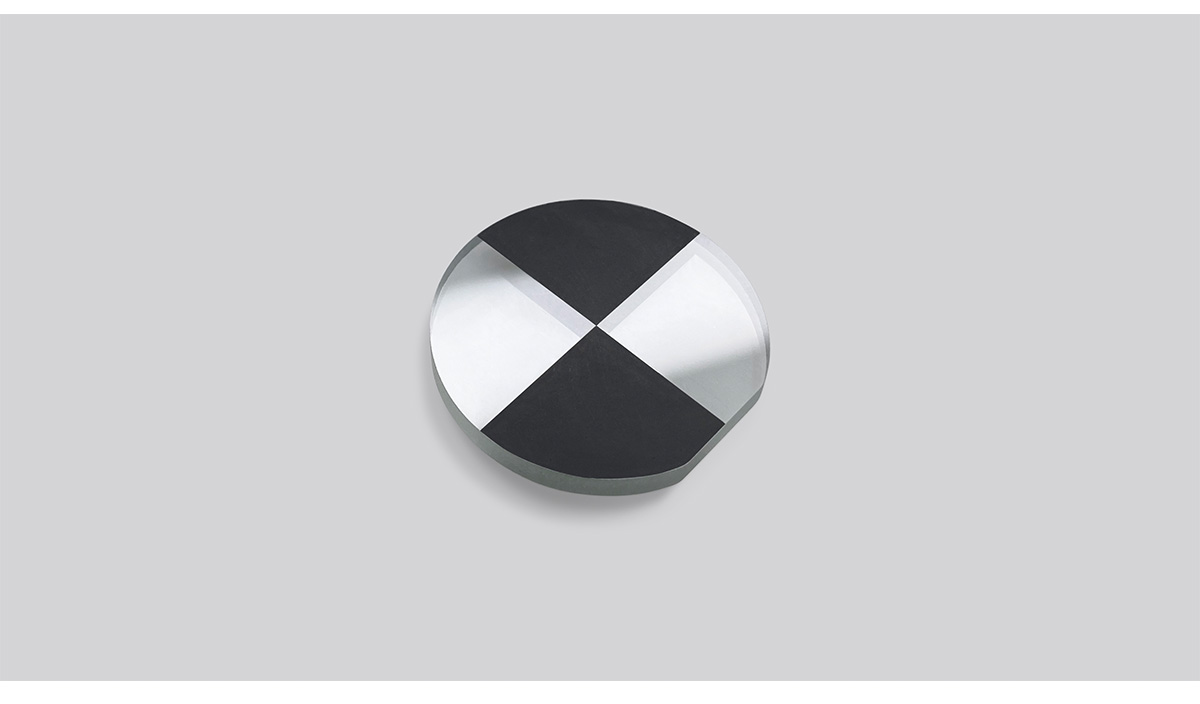
Product photograph of Glass Photomask

FAQ of Glass Photomask
1. Which coating structure should be selected for a Glass Photomask?
A Custom Glass Photomask can use black coating, chrome with black coating, or White PE with black coating. The black version provides OD above 5, the chrome-and-black version provides OD above 4.2, and the White PE version provides OD above 3 with diffuse reflection. Selection depends on whether the system uses transmitted or reflected illumination.
2. How does the non-reflective surface improve a Glass Photomask?
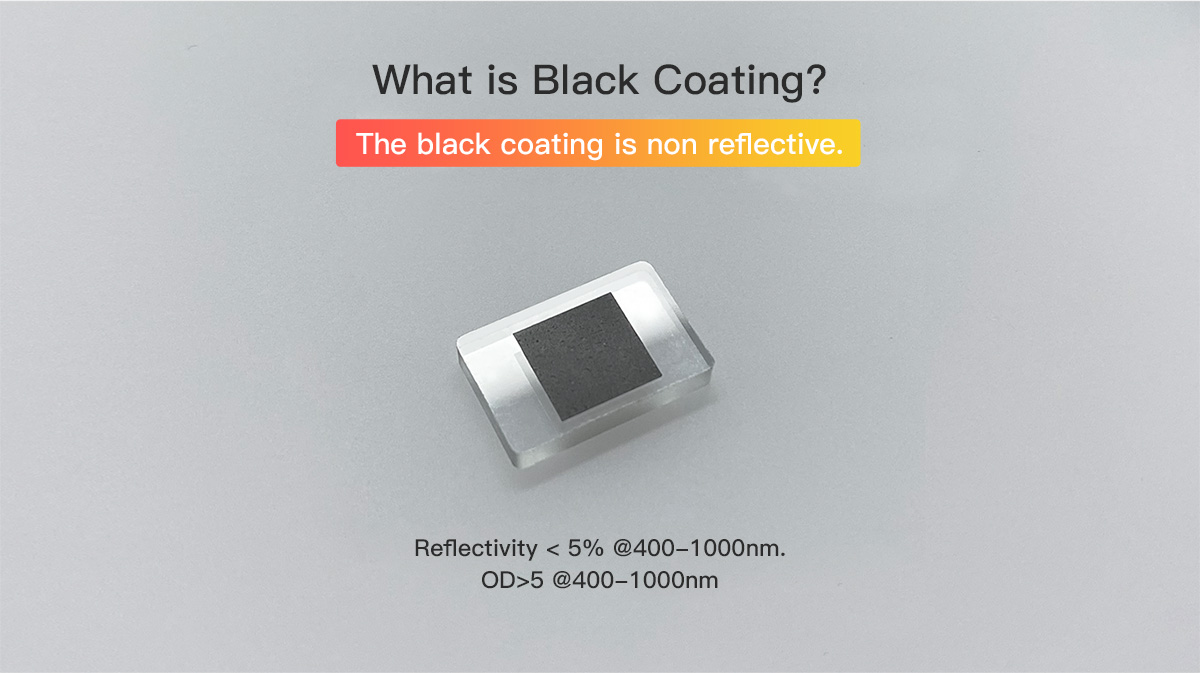
The matte Black Glass Photomask coating has a reflectivity below 3.89% at 550 nm. Lower surface reflection reduces glare and unwanted bright regions, helping the camera detect pattern edges more consistently under controlled illumination.
3. What is the difference between positive and negative patterns on a Glass Photomask?
A positive pattern has opaque features on a clear background, while a negative pattern has clear features within an opaque background. For a Custom Optical Mask, polarity should match whether the optical system needs dark reference features or transparent apertures.
4. What feature precision can this Glass Photomask provide?
The minimum line/space is 20 µm, and the stated feature and overall accuracy are ±2 µm. This allows a Glass Calibration Mask to carry fine reference patterns, but the complete system accuracy still depends on imaging magnification, pixel sampling, focus and mounting.
5. Which glass thickness should be selected for a Glass Photomask?
Available glass thicknesses include 1, 1.6, 3.2, 4 and 4.8 mm, with a tolerance of ±0.3 mm. Thin glass reduces weight and installation space, while thicker glass offers greater rigidity. For sizes below 100 mm, the specified surface flatness is less than 10 µm.
6. How should the coated surface of a Glass Photomask be protected?
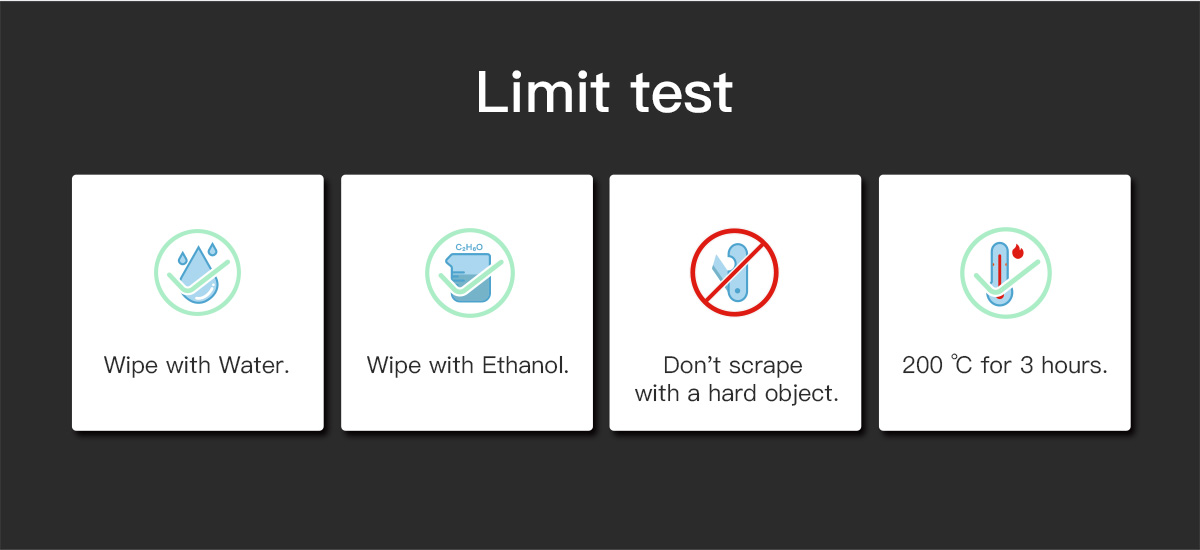
An optional protection layer can be added over the coating. The specified surface quality is 40-20 scratch-dig, so the mask should be handled by its edges and stored in a clean container. Avoid abrasive cloths and unapproved solvents when cleaning the coated surface.